Top NFT Marketplaces in 2026: Where to Buy and Sell Digital Assets
Discover the top NFT marketplaces in 2026 to buy, sell, and trade digital art, collectibles, and gaming assets across multiple blockchains.

Gift Jeremiah
Jan 13, 2026
The top NFT marketplaces to use right now are OpenSea, Rarible, Crypto.com NFT, SuperRare, Nifty Gateway, Binance NFT, Axie Marketplace, Foundation, Magic Eden, and Solanart. These platforms stand out for their large user bases, strong liquidity, wide blockchain support, transparent fees, and diverse collections ranging from art and collectibles to gaming items and virtual worlds.
To identify the best NFT marketplaces, buyers and creators must consider several factors such as supported blockchains, creator royalties, trading fees, collection variety, ease of use, community strength, and overall marketplace security.
In this guide, we will explain what an NFT marketplace is, break down the top NFT marketplaces in detail, compare their features in a simple table, and show you how to choose the right platform for buying or selling NFTs. We will also walk you through how NFT marketplaces work and how to buy your first NFT step by step. Below is the comparison table of the top NFT marketplace.
Marketplace | Supported Blockchain | Supported NFTs | Fees | Best For |
OpenSea | Ethereum, Polygon, Solana, Base | Art, collectibles, PFPs, gaming assets, domains | 2.5% trading fee | Beginners and large NFT collections |
Rarible | Ethereum, Polygon, Tezos, Immutable | Art, music, PFPs, gaming items | 1 % buyer and seller fee | Creators and multi chain minting |
Crypto.com NFT | Cronos, Ethereum, Polygon | Art, sports NFTs, collectibles | 0% trading fee | Sports fans and new traders |
SuperRare | Ethereum | One of one art | 15 % creator commission, 3 % buyer fee | Premium digital art |
Nifty Gateway | Ethereum | Art drops, curated collections | Varies by creator | Curated and exclusive NFT drops |
Binance NFT | BNB Chain, Ethereum, Polygon | Art, gaming NFTs, mystery boxes | 1% trading fee | Low fee NFT buying and selling |
Axie Marketplace | Ronin | Gaming assets, characters, land | Varies by item | Play to earn gaming |
Foundation | Ethereum | Art, creator projects | 5% marketplace fee | Independent artists |
Magic Eden | Solana, Ethereum, Polygon, Bitcoin Ordinals | Art, gaming NFTs, Ordinals | 1.5% trading fee | Solana and Ordinals traders |
Solanart | Solana | Art, PFP projects | 0% trading fee | Solana based NFT collections |
What Is an NFT Marketplace?
An NFT marketplace is a digital platform where users can mint, buy, sell, trade, and auction non fungible tokens. These platforms act as the central hubs for NFT transactions, offering tools that help creators list new items and allow collectors to browse thousands of digital assets across different categories.
NFT marketplaces also provide features such as wallet integration, creator royalties, collection rankings, and secure on-chain ownership tracking, making it easy for beginners and professionals to participate in the NFT ecosystem. Below are the top NFT marketplaces to explore in 2026.
1. OpenSea
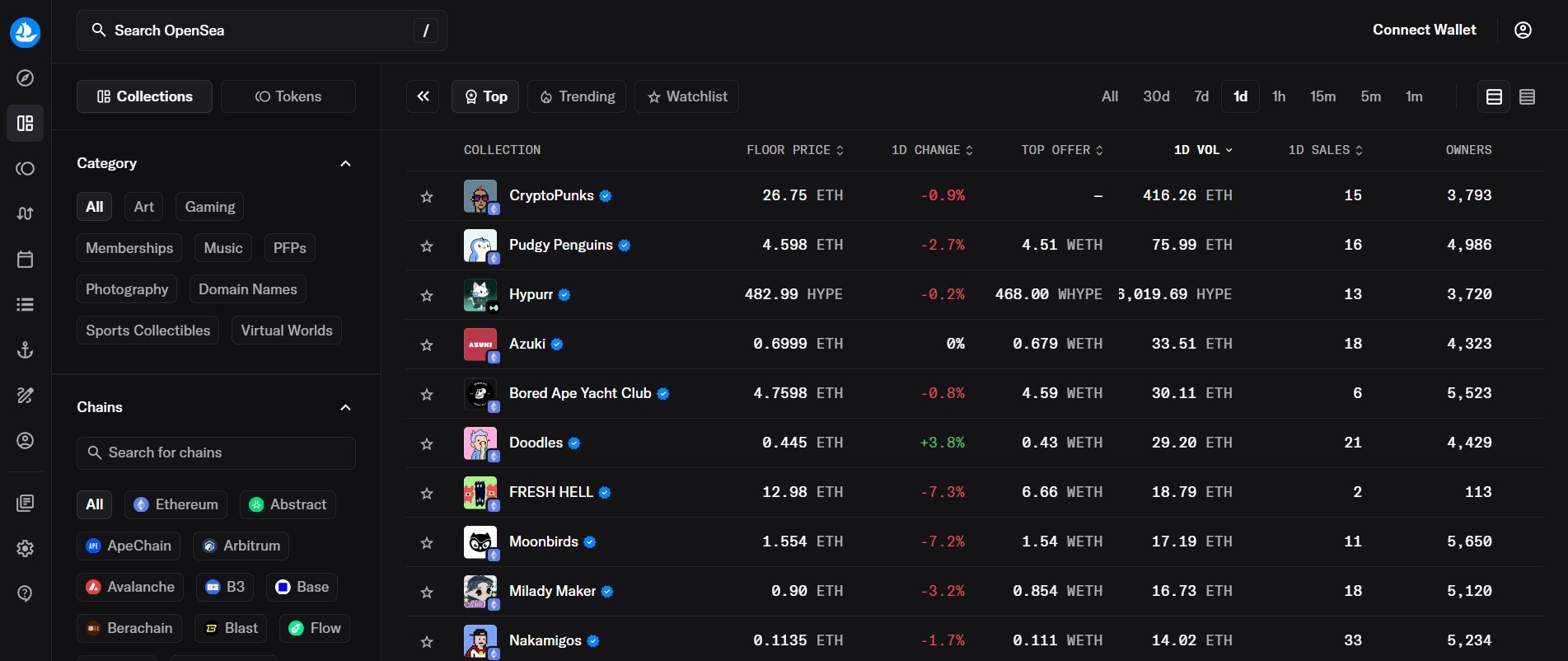
OpenSea is the largest NFT marketplace in the world, providing a platform for creators and collectors to buy, sell, and discover digital assets. The marketplace hosts a wide range of NFTs, including digital art, PFP collections, virtual land, game items, domain names, and music. OpenSea is known for its user-friendly interface, advanced search and filtering tools, and a robust ecosystem that supports both beginners and experienced NFT traders.
The platform also allows creators to mint NFTs, manage royalties, and interact with a global community of collectors. OpenSea supports multiple blockchains, making it versatile and accessible while continuously innovating to add new features and improve user experience.
Number of supported NFTs: 20,000,000+
Pros:
Extensive Collection: With over 20,000,000 NFTs, OpenSea gives collectors a huge variety of options, increasing the chance of finding rare or valuable items.
Ease of Use: Its intuitive interface makes browsing, buying, and selling NFTs straightforward, which is especially helpful for newcomers to the NFT space.
Creator Flexibility: Creators can mint NFTs, set royalties, and manage their collections easily, allowing them to maintain control and monetize their work efficiently.
High Liquidity and Active Community: The marketplace maintains strong trading activity, increasing the chances of NFTs being discovered and purchased quickly.
While the Cons of Opensea are:
High Transaction Fees: Many NFTs are on Ethereum, and network gas fees can be expensive, making small purchases less profitable.
Growing Competition: As more NFT marketplaces emerge, OpenSea may face challenges in retaining creators and buyers, potentially affecting liquidity and market dominance.
Unverified or Low Quality Collections: Some assets lack verification or proper curation, which may expose buyers to low quality or misleading listings.
2. Rarible
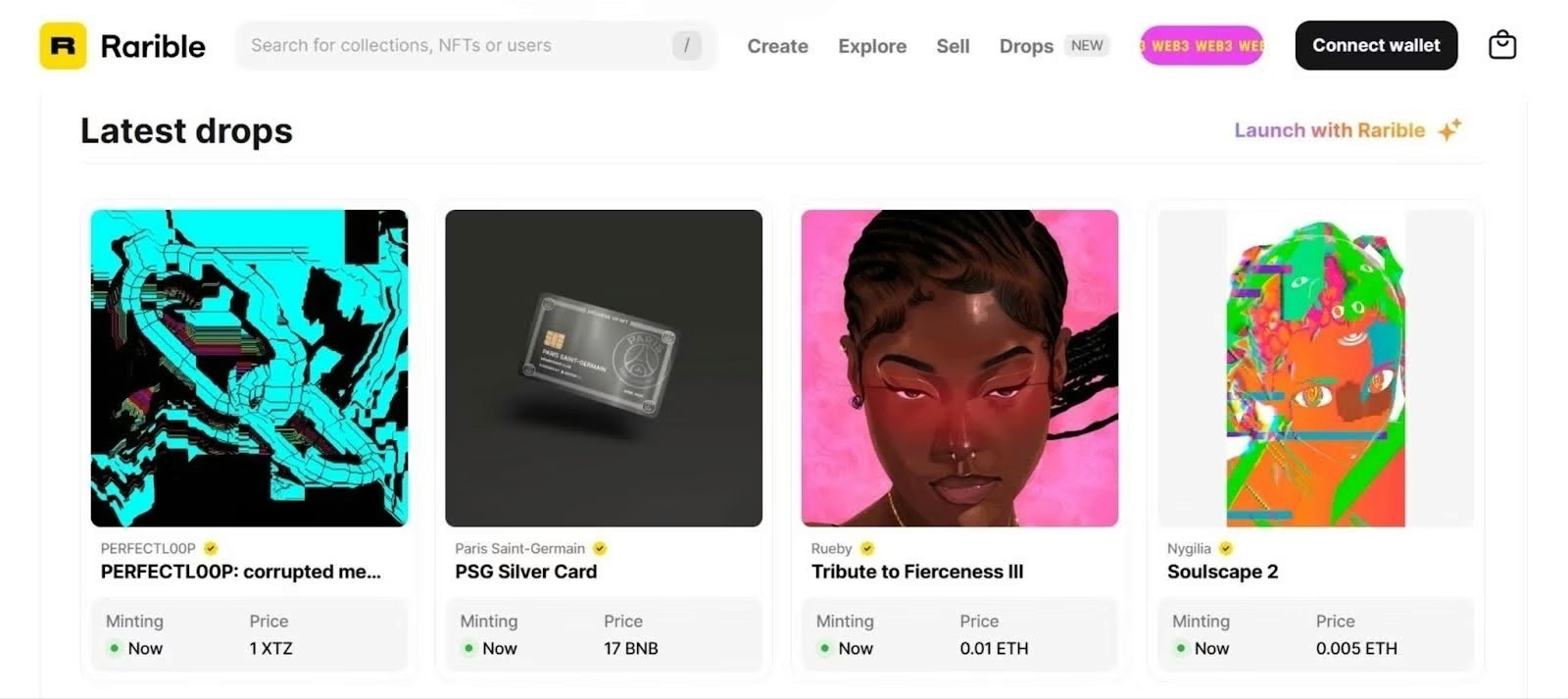
Rarible is a decentralized NFT marketplace designed to empower creators with full ownership and control over their digital assets. The platform supports the creation, buying, and selling of digital art, collectibles, and other NFTs while allowing users to earn royalties on secondary sales. It also emphasizes community governance, enabling users to vote on platform updates using the RARI token.
Rarible supports multiple blockchains, including Ethereum, Flow, and Tezos, giving creators and collectors a range of options for minting and trading NFTs. The marketplace also integrates social features that encourage community interaction and collaboration among artists and collectors.
Number of supported NFTs: 2,500,000+
Pros:
Decentralized Control: Rarible gives creators full control over their NFTs, including royalties, ownership, and pricing.
Multi-Chain Support: Compatibility with several blockchains allows lower fees and more options for creators and collectors.
Community Governance: Users can influence platform decisions, fostering a stronger sense of participation and loyalty.
Multi-Chain Compatibility: The marketplace supports Ethereum, Polygon, Tezos, and Immutable X, giving users several blockchain options.
Cons:
Lower Liquidity: Compared to OpenSea, Rarible has fewer active users, which can make buying and selling certain NFTs slower.
Complex for Beginners: Advanced features like governance voting and multi-chain options may overwhelm new users.
Some Collections Lack Strong Curation: Open listings sometimes include low quality or repetitive assets.
3. Crypto.com
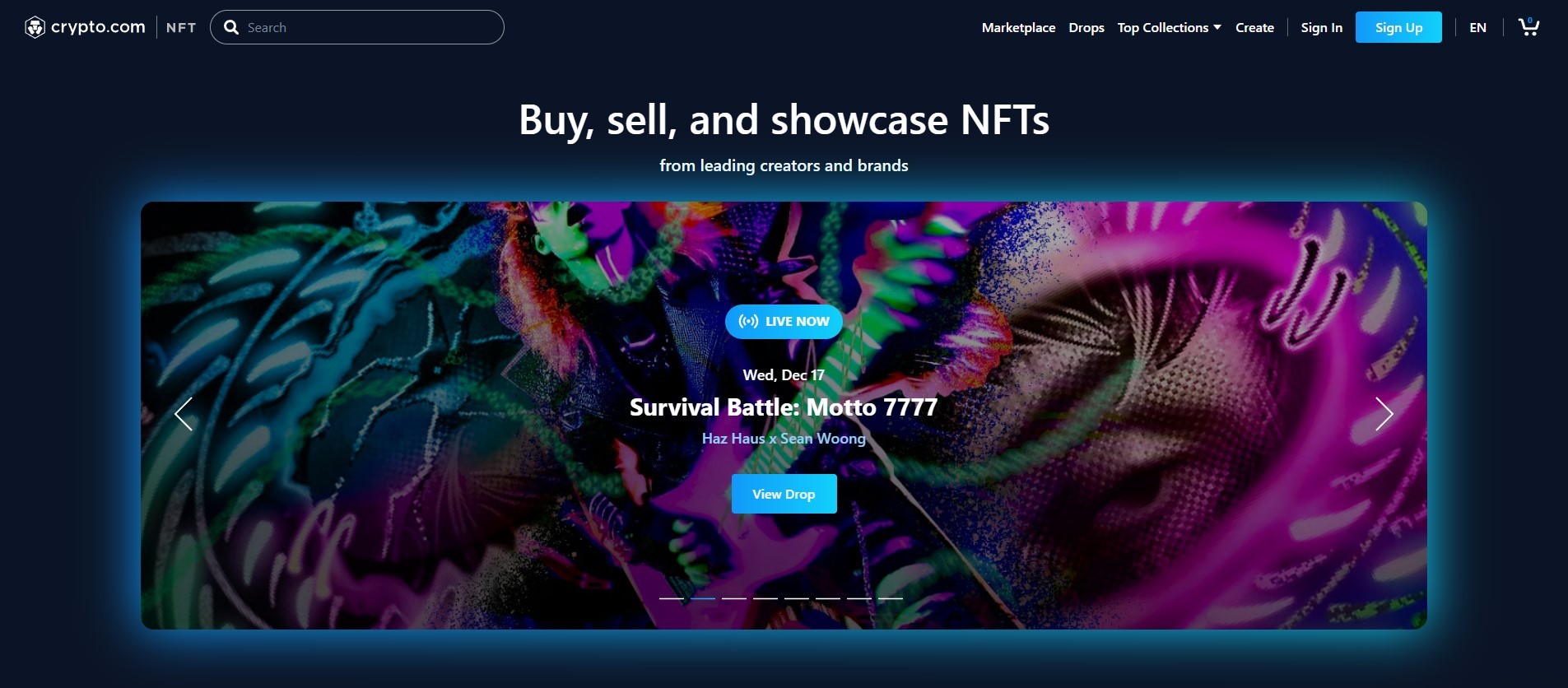
Crypto.com NFT is an extension of the popular Crypto.com exchange, offering an NFT marketplace for art, collectibles, gaming, and entertainment-themed digital assets. The platform leverages Crypto.com’s large user base, allowing crypto enthusiasts and newcomers alike to explore and trade NFTs seamlessly. With integrated wallet support and a familiar interface, it provides a smooth entry point for those already using the exchange.
The marketplace features exclusive drops, celebrity collaborations, and community events, attracting both collectors and creators. Its mobile app integration ensures users can browse, buy, or sell NFTs on the go, making NFT trading convenient and accessible.
Number of supported NFTs: 1,500,000+
Pros:
Integrated with Exchange: Easy access for Crypto.com users to buy, sell, and store NFTs directly within the app.
Exclusive Drops: Celebrity collaborations and limited releases increase engagement and collector interest.
User-Friendly Interface: Simple navigation and mobile support make NFT trading accessible for beginners.
Zero Trading Fees on Primary Sales: Buyers and creators save money when purchasing initial drops.
Cons:
Limited Blockchain Options: Primarily supports NFTs on Ethereum and Cronos, restricting cross-chain exposure.
Smaller Community Compared to OpenSea: Lower liquidity and fewer secondary market opportunities.
Fewer Blockchain Options: Primarily supports Crypto.com’s ecosystem.
Some Assets are Centered on Pop Culture: May not appeal to collectors seeking traditional or experimental art.
4. SuperRare
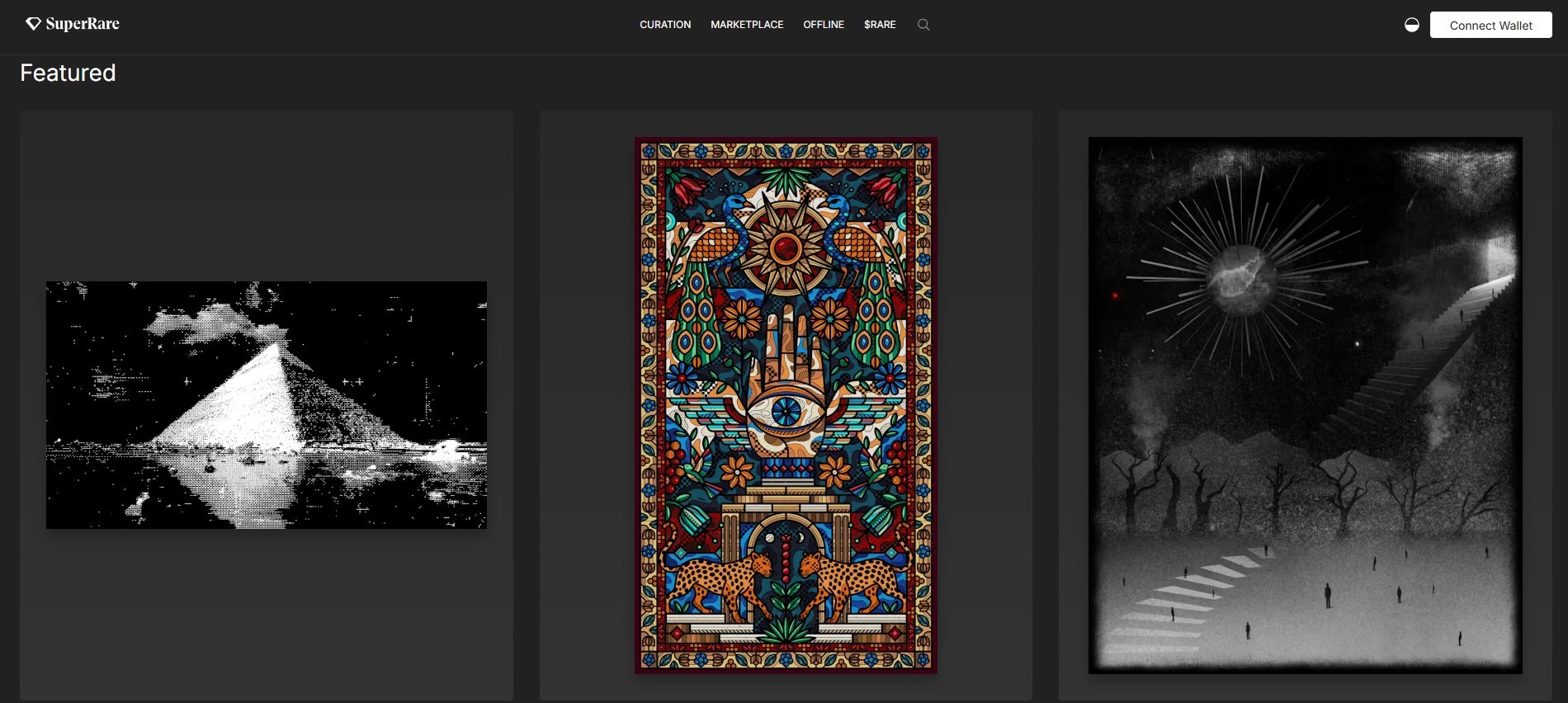
SuperRare is a curated NFT marketplace that focuses on high-quality, single-edition digital art. The platform emphasizes originality and exclusivity, attracting serious collectors and artists who want their work to stand out. Each NFT is tokenized on Ethereum, ensuring authenticity, provenance, and scarcity.
Artists can showcase and sell their creations while earning royalties on secondary sales, providing long-term revenue opportunities. SuperRare also offers social features such as following favorite artists and engaging with the community to foster a vibrant ecosystem.
Number of supported NFTs: 150,000+
Pros:
Curated Quality: Only verified, high-quality digital art is listed, which increases the value and trust for collectors.
Royalties for Artists: SuperRare ensures creators earn a percentage from every resale, offering sustainable income.
Active Community: The platform encourages networking and collaboration among artists and collectors.
Cons:
Limited Selection: Strict curation means fewer NFTs are available compared to larger marketplaces.
Ethereum Fees: Transactions on Ethereum can be expensive, which might discourage smaller buyers.
5. Nifty Gateway
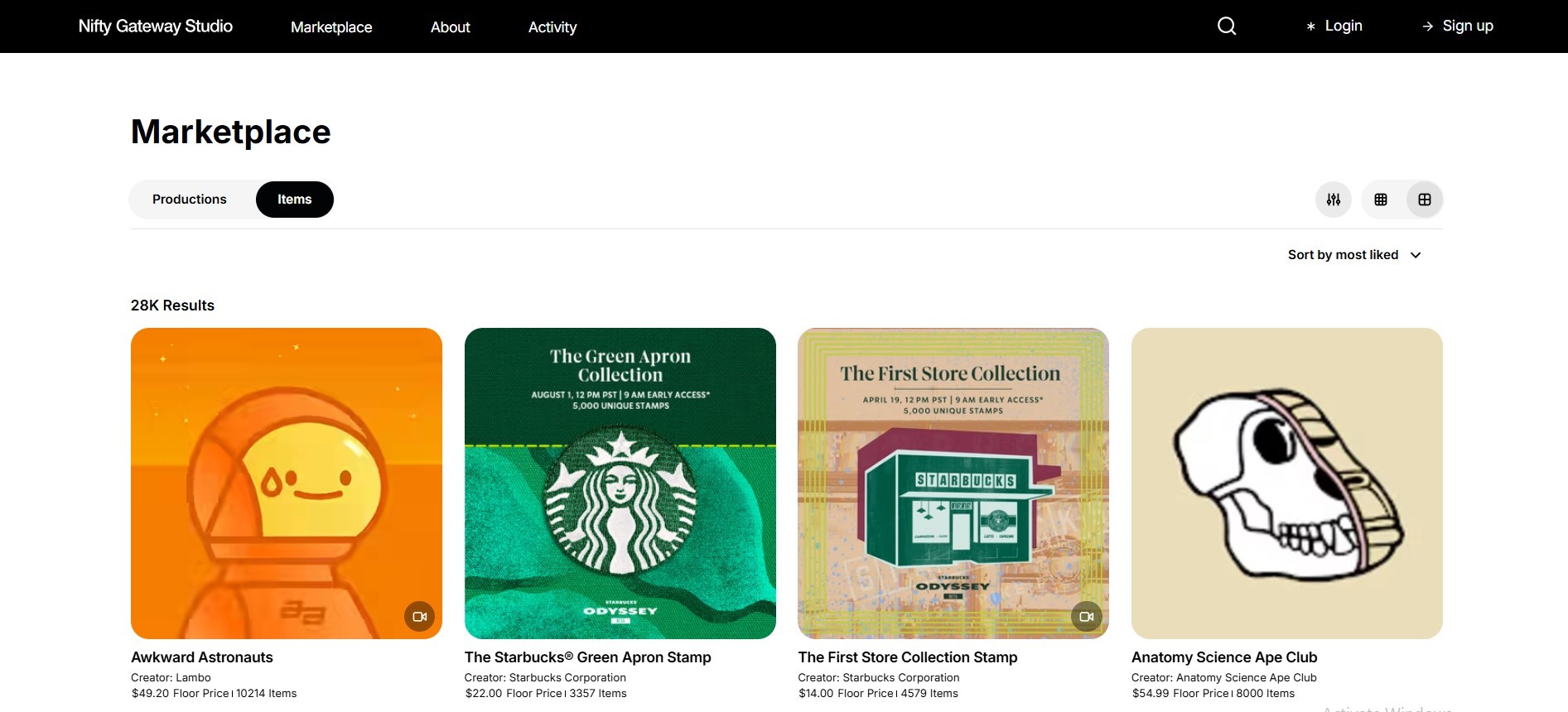
Nifty Gateway is a high-profile NFT marketplace known for hosting exclusive drops from top artists and brands. It simplifies the buying and selling process by allowing purchases with both crypto and fiat, making it more accessible to mainstream collectors. The platform frequently collaborates with well-known creators, driving high demand for limited edition NFTs.
Collectors benefit from Nifty Gateway’s curated environment, which ensures high-quality digital assets and reduces the risk of low-value or spam NFTs. Its custodial wallet system also removes technical barriers, allowing users to manage NFTs without handling private keys.
Number of supported NFTs: 50,000+
Pros:
Exclusive Drops: Nifty Gateway partners with top artists and brands, providing collectors access to rare, high-demand NFTs that often sell out quickly.
Fiat-Friendly Purchases: The platform allows buying NFTs with credit cards or other fiat options, making it easier for newcomers to join the NFT space.
Curated Marketplace: Every NFT listed is vetted, ensuring high quality and authenticity for buyers.
Fiat payment support: Buyers can use credit or debit cards, which simplifies purchases for users unfamiliar with crypto transactions.
Cons:
Custodial Wallets: Users do not control private keys, which may reduce ownership security and increase reliance on the platform.
Higher Prices on Many Drops: Exclusive artwork often comes with premium pricing, which can discourage casual collectors or budget-conscious buyers.
Limited Marketplace Diversity: The platform focuses heavily on curated art and celebrity drops, offering fewer options for gaming assets, collectibles, or community-led collections.
6. Binance NFT
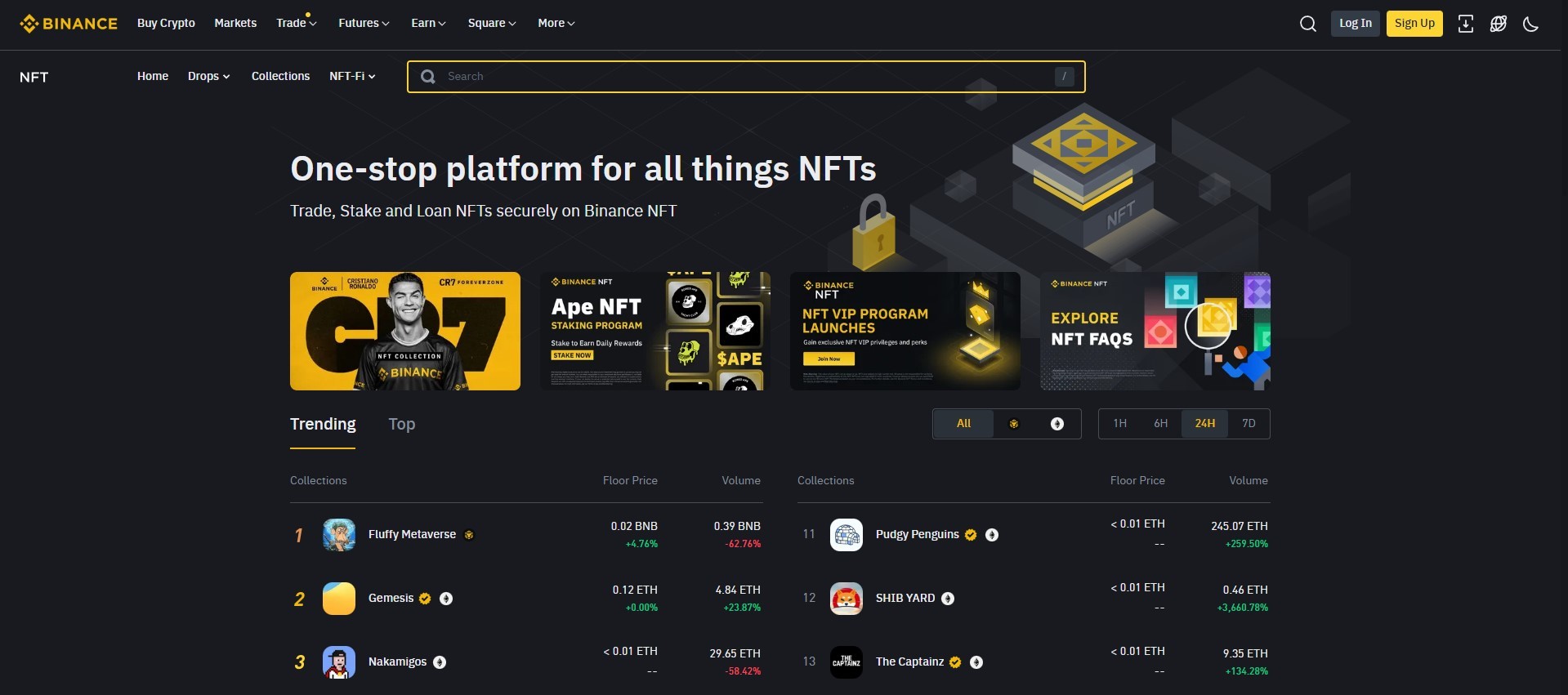
Binance NFT is the official NFT marketplace of the Binance ecosystem, offering a wide range of digital assets including artwork, collectibles, and game items. Its integration with Binance’s exchange platform makes it easy for crypto traders to buy, sell, and trade NFTs using a variety of cryptocurrencies. The platform also hosts limited-time drops and collaborations with global artists, making it a popular choice for both collectors and investors.
Binance NFT provides users with a highly liquid marketplace and low transaction fees compared to other NFT platforms. Its advanced tools and analytics help collectors discover trending NFTs and track market performance, providing a competitive edge for serious traders.
Number of supported NFTs: 2,000,000+
Pros:
High Liquidity: Binance NFT offers a large user base and trading volume, making it easier to buy and sell NFTs quickly.
Low Fees: Transaction and listing fees are comparatively lower than many NFT marketplaces, improving profitability for traders.
Exclusive Drops and Brand partnerships: The platform hosts premium collaborations with creators, gaming studios, and global brands, giving users access to limited items not available elsewhere.
Global Reach: The platform hosts international artists and collectors, allowing exposure to a worldwide market.
Cons:
Limited Focus on Independent Artists: The marketplace prioritizes large collections and brand driven projects, which may reduce visibility for smaller creators trying to grow their audience.
Centralized Structure: Users rely on Binance’s ecosystem for storage and transactions, which removes some of the independence associated with fully decentralized NFT marketplaces.
Regional Restrictions: Certain locations may face limitations on access due to Binance’s regulatory policies, which affects the availability of specific features or drops.
7. Axie Marketplace
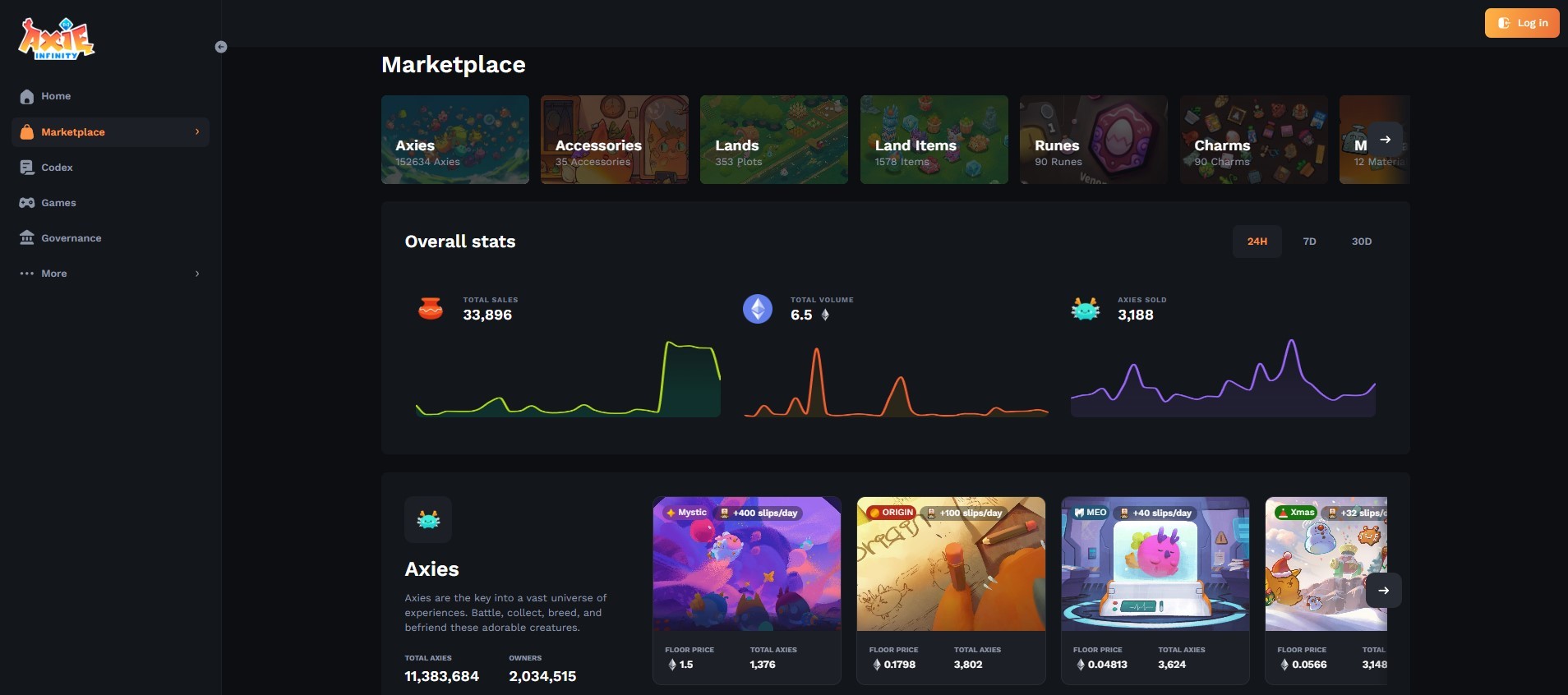
Axie Marketplace is the official platform for buying, selling, and managing assets within the Axie Infinity ecosystem. It acts as a central hub where players can acquire Axies, land plots, in-game items, and collectibles that influence battles, breeding, and progression in the game.
The marketplace simplifies asset discovery with clear categories, transparent pricing, and a layout that allows players to compare traits before making decisions. Each item carries functional value in gameplay, making strategic planning and collection goals key motivations for users.
The platform was built on Ronin, a sidechain designed for fast and low-cost transactions, the marketplace allows users to trade without the high fees often associated with larger blockchains.
Number of NFTs Supported: 2 000 000+
Pros:
Dedicated Platform for In-game Assets: Each listing serves a practical purpose, creating steady demand for both new and experienced players.
Fast and Affordable Transactions: The Ronin sidechain allows multiple trades without high fees.
Organized Layout For Trait Comparison: Buyers can review class, body parts, and battle abilities to make informed decisions.
Strong Community Activity: A loyal user base keeps trading active and opportunities plentiful.
Integration with the Axie Economy: Assets purchased flow directly into gameplay, providing immediate utility.
Cons:
Price Fluctuations Tied to Gameplay Trends: Values change as game mechanics evolve, making long-term planning difficult.
Limited Diversity In Asset Types: Focused solely on Axie-related items, which may feel restrictive for collectors.
Dependence on Game Popularity: Activity rises and falls with the Axie Infinity player base.
Learning Curve for New Players: Understanding traits, classes, and breeding can be overwhelming.
Risk of Overvalued Assets During Hype Cycles: Prices may spike during high demand, potentially leading to inflated purchases.
8. Foundation
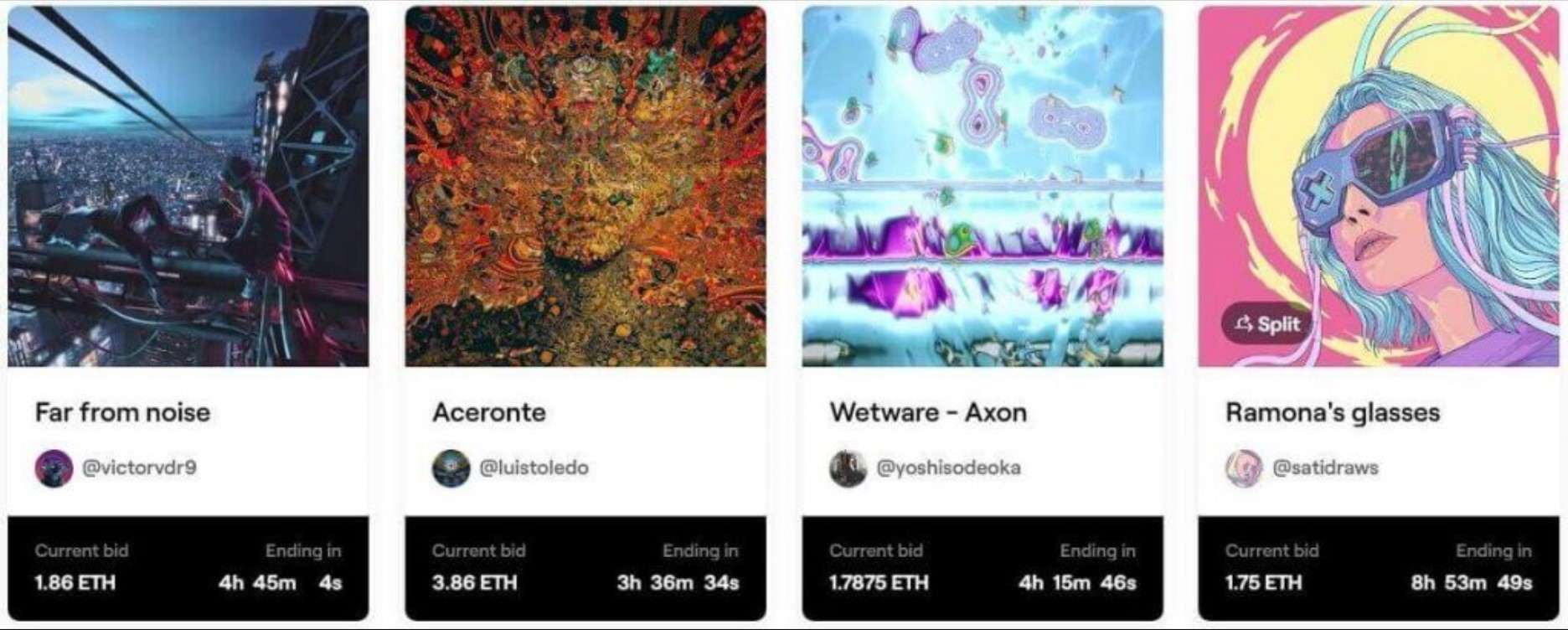
Foundation is an art focused NFT marketplace created to spotlight digital creators who want a clean, curated environment for showcasing their work. The platform was designed to support artists who prefer quality over volume, and it offers a gallery-like experience that feels structured and intentional.
Every listing highlights the story behind each artwork, giving collectors a space that values creativity, expression, and artistic identity. Because Foundation encourages a more curated approach, buyers often visit the marketplace when they want distinctive pieces that differ from high-volume collections.
The platform runs on Ethereum, which gives artists access to a wide collector base and reliable smart contract infrastructure. While Ethereum fees can be high during peak periods, many creators still prefer the network because it enhances the long-term value and authenticity of their work.
Foundation continues to attract both emerging and well known artists who want an environment that treats each piece as a meaningful contribution rather than a casual collectible. The marketplace also strengthens artist visibility through profile pages, bidding systems, and clear provenance history for each asset.
Number of Supported NFTs: 25000+
Pros
Artist Centered Platform: Foundation prioritizes creators and their artistic vision, giving each piece enough space to stand out.
Clean Curation and Aesthetic Presentation: The marketplace uses a minimal layout that places attention directly on the art.
Support for High Quality Digital Art: Artists who work with intricate visuals, animations, and storytelling elements often prefer Foundation because the platform treats their work as premium content.
Reliable Provenance and Bidding Tools: Every artwork has a clear ownership trail, and the auction system encourages competitive bidding, which can increase visibility and potential earnings for creators.
Cons
Limited Categories Beyond Art: The platform focuses primarily on high end artwork, so users searching for PFPs, gaming assets, or wide ranging collectibles may find fewer options.
Reduced Visibility for New Creators: Established artists often receive most of the attention, which can make it difficult for newcomers to attract competitive bids without strong promotion.
Dependence on Ethereum Market Conditions: Fluctuations in gas fees, market sentiment, and network activity can affect both the experience and the overall cost of interacting with the platform.
9. Magic Eden
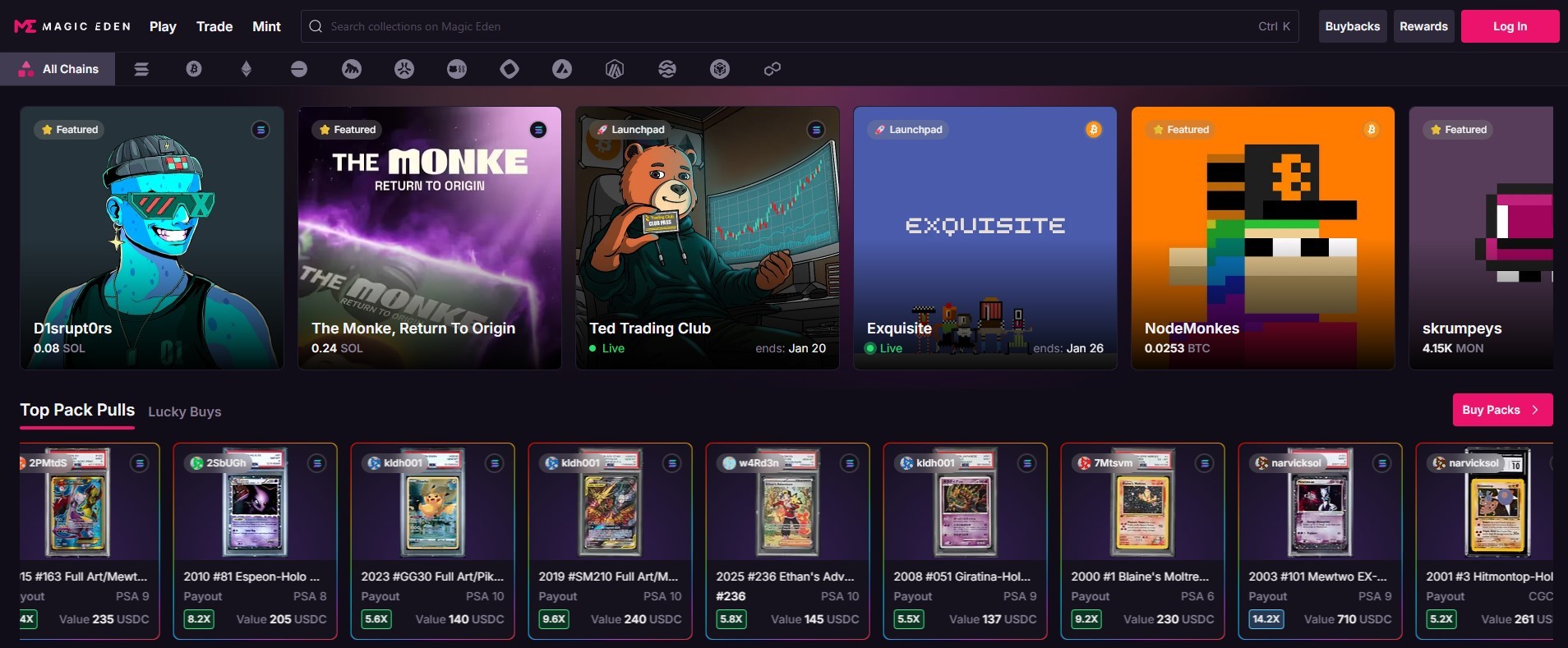
Magic Eden is a leading Solana-based NFT marketplace that enables users to mint, buy, and sell digital collectibles quickly and efficiently. The platform has expanded to include Ethereum and Polygon NFTs, making it a versatile hub for creators and collectors. Magic Eden focuses on accessibility, low fees, and fast transactions, supporting a wide variety of NFT categories including art, gaming items, collectibles, and metaverse assets.
Users can explore trending drops, participate in auctions, or use instant listings to secure rare pieces. Built on Solana, Magic Eden benefits from high-speed transactions and extremely low network fees. The marketplace also incorporates a launchpad for creators, tools for NFT analytics, and community-driven features that encourage social sharing and engagement.
Its multi-chain expansion increases liquidity and offers collectors more options across ecosystems, making it one of the fastest-growing NFT marketplaces.
Number of NFTs Supported: 500,000+ NFTs
Pros:
Multi-Chain Support: Offers NFTs on Solana, Ethereum, and Polygon for wider accessibility
Fast and Low-cost Transactions: Solana’s blockchain reduces fees and ensures quick trades.
Creator-Friendly Tools: Launchpad and analytics help artists mint and promote NFTs effectively.
Dynamic Community Features: Social sharing and engagement foster active participation.
Wide Variety of NFT Categories: Includes art, gaming, collectibles, and metaverse assets.
Cons:
High Competition For Visibility: New creators may struggle to stand out among popular drops.
Ethereum and Polygon Fees: Users may still face higher costs when trading NFTs on these chains.
Market Volatility: NFT prices fluctuate rapidly, influenced by trends and hype.
Focus on Speed Over Curation: Some lower-quality NFTs may appear due to open listings.
Limited historical data: Tracking long-term performance of NFTs can be challenging for collectors.
10. Solanart
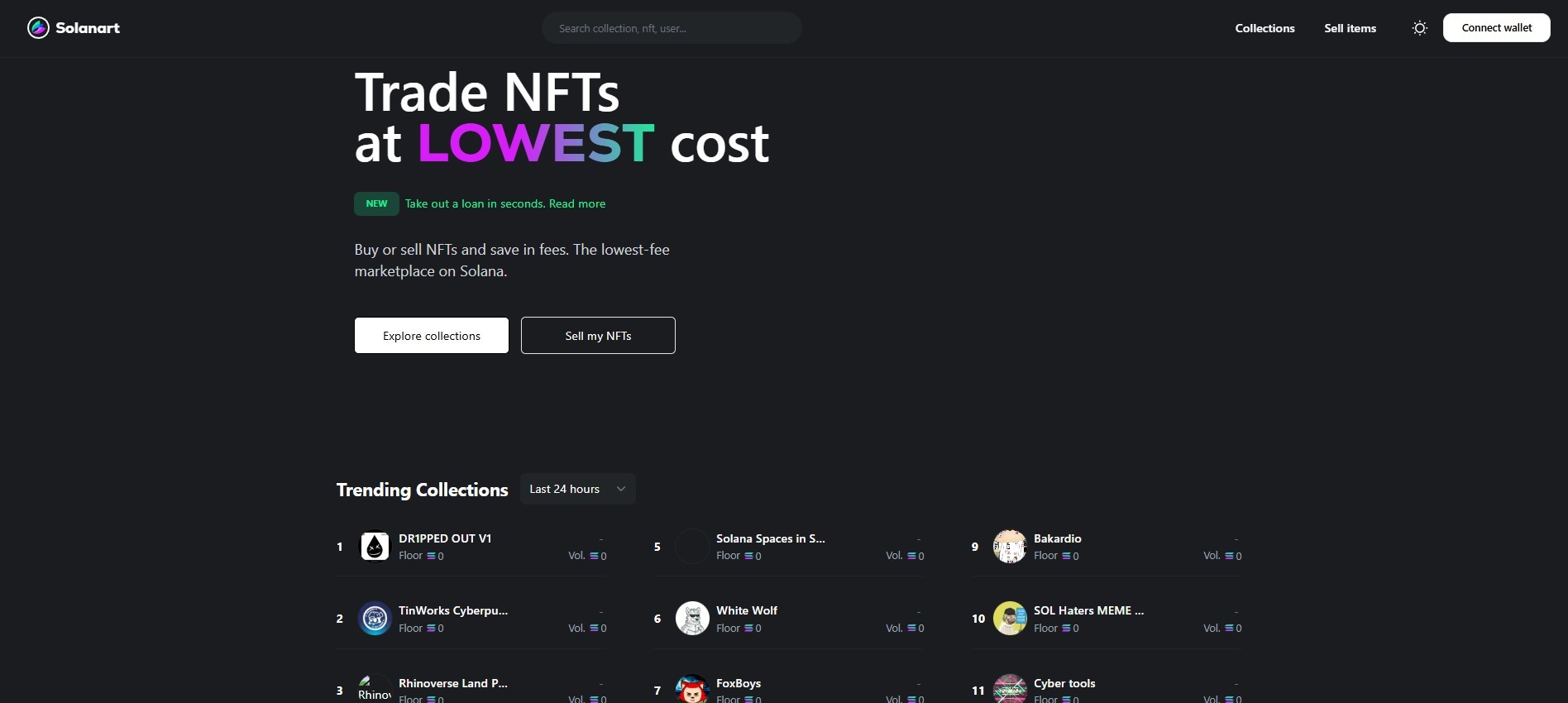
Solanart is one of the first NFT marketplaces on the Solana blockchain, catering to collectors and creators interested in digital art and collectibles. The platform emphasizes ease of use and transparency, allowing users to browse verified collections, purchase NFTs directly, and list assets for sale.
Solanart’s curated approach ensures that only legitimate and approved projects are listed, protecting collectors from scams and maintaining quality standards. As a Solana-based platform, Solanart offers fast, low-cost transactions, making it attractive for both new and experienced collectors.
The marketplace supports a range of NFT categories, including art, gaming items, and collectible series, and has grown a dedicated user base thanks to its simple interface and trust-focused design. Active community involvement through secondary sales and social features further strengthens Solanart’s ecosystem.
Number of NFTs Supported: 100,000+ NFTs
Pros:
Artist centered platform: This marketplace places creative expression at the front, giving every artwork enough space to shine. Collectors who appreciate originality find it easier to discover pieces that reflect a unique artistic voice.
Clean curation and presentation: Its minimalist structure removes distractions, drawing full attention to the artwork.
Support for high quality digital art: Creators can explore detailed visuals, animations, and narrative based pieces. The environment welcomes ambitious concepts and polished craftsmanship.
Reliable provenance and bidding tools: Ownership records remain clear from one collector to another, strengthening trust during each sale. Auction features encourage active participation and healthy price discovery.
Strong artist community: A steady network of creators and collectors supports collaboration, feedback, and long-term connections.
Cons
Limited to Solana based NFTs: Users who want to trade assets on Ethereum or other chains will not find cross-chain flexibility here. The marketplace remains fully tied to the Solana ecosystem.
Lower liquidity than larger marketplaces: Some collections may attract fewer active buyers, which can slow down sales. This affects traders who prefer fast turnover.
Market volatility: NFT prices move quickly with changing trends, making it challenging to maintain stable valuations. Collectors must stay aware of shifting demand.
Competition for popular NFTs: High demand releases sell out almost instantly, giving newcomers limited access to trending assets. Timing becomes crucial during drops.
Fewer advanced trading tools: The marketplace does not offer in-depth analytics for users who want detailed market insights. Serious traders may need external tools for deeper evaluation.
How to Buy NFTs on Top NFT Marketplaces?
Get a Crypto Wallet: Choose a wallet compatible with NFTs. Set it up properly, store your seed phrase securely.
Fund Your Wallet: Buy cryptocurrency (often ETH, SOL, or another relevant token) and transfer it into your wallet.
Choose a Marketplace: Decide which NFT marketplace you want to use (OpenSea, Rarible, Magic Eden, Binance NFT, etc.). Then connect your wallet to that marketplace.
Browse or Search for NFTs: Use the marketplace’s search, filters, and categories to find NFTs you’re interested in. You can buy from fixed‑price listings or participate in auctions (if the marketplace supports it).
Check Fees and Gas Costs: For each purchase, look at the total cost including: marketplace transaction fees + “gas” (blockchain transaction cost) + any royalty to creators. On blockchains like Ethereum, gas can be very high when the network is congested.
Buy the NFT: Click “Buy” (or “Place Bid” if it’s an auction). Confirm the transaction in your wallet (this is where you pay gas). Then wait for the transaction to be confirmed on-chain.
Secure Your NFT: After purchase, the NFT is “owned” by your wallet’s address. You can view it in your wallet or on the marketplace under “My Items” (or similar).
What is the Best NFT Marketplace?
The best NFT platforms to buy, sell, and trade digital collectibles are OpenSea, Rarible, Crypto.com NFT, SuperRare, Nifty Gateway, Binance NFT, Axie Marketplace, Foundation, Magic Eden, and Solanart.
How Does an NFT Marketplace Work?
NFT marketplaces work by connecting creators and buyers on a digital platform where unique assets are traded. Creators mint NFTs, which are recorded on the blockchain, and list them for sale. Buyers link their digital wallets, browse available NFTs, and either place bids or purchase directly using cryptocurrency. Once a sale is completed, ownership is automatically transferred on the blockchain, and creators can receive royalties from future resales.
How to Choose the Best NFT Platforms?
Identify Your Needs: Determine whether you want to buy, sell, or create NFTs, since different platforms serve collectors, artists, or both.
Supported Blockchains: Check if the marketplace supports the blockchain your NFT is built on. Popular options include Ethereum, Solana, and Polygon.
Creator Royalties: Look for platforms that allow creators to set and earn royalties from secondary sales.
Trading Fees: Compare listing fees, transaction fees, and gas fees to find a marketplace that fits your budget and trading strategy.
Collection Variety: Choose platforms that offer the type of NFTs you want, such as art, collectibles, music, or gaming assets.
Ease of Use: Consider how easy it is to navigate the platform, search for NFTs, connect your wallet, and complete transactions.
Community Strength: Active and engaged communities can make buying and selling NFTs more rewarding and increase the visibility of your collections.
Marketplace Security: Select platforms with strong security features, transparency, and a solid reputation among users.
NFT Marketplace With Low Fees?
NFT platforms with low fees focus on networks that settle transactions quickly without heavy costs. Options like Magic Eden, Solanart, and OpenSea on Polygon give traders a way to mint, buy, and sell assets without high charges. These platforms reduce the burden of gas expenses while maintaining reliable execution for active collectors. Anyone who wants affordable trades can start with networks that support fast confirmations and simple payment structures.
About

Delivering independent journalism, thought-provoking insights, and trustworthy reporting to keep you informed, inspired, and engaged with the world every day.
Featured Posts